Perspectives
Our Thinking
Strategic insights drawn from the intersection of international business, sovereign politics, and the global thoroughbred industry — written for leaders navigating high-stakes decisions.
What It Takes to Create a Sector Where None Existed
In 2018, Saint Lucia had no racing industry, no regulatory framework, no infrastructure, and no precedent. Within three years, it had all four. The lessons apply to any leader tasked with building something new in an unfamiliar environment.
Why Cultural Fluency Is a Commercial Necessity, Not a Courtesy
The most expensive mistakes in international business are rarely strategic. They are cultural. A practical framework for navigating cultural complexity in high-stakes negotiations.
Leadership & Strategy
By Eden Harrington
5 min read
March 2026
The One Thing AI Cannot Automate

The scale and scope of artificial intelligence's (AI) involvement in our businesses is rightly central to daily discussions in boardrooms and future business planning right now.
Not a day goes by when there isn't a headline around a new capacity or use for AI or a headline on mass job layoffs or predicted layoffs. It is creating varying sentiments that often crossover within the confines of a business. An audience that wants to know about potential opportunities. An alternate audience concerned and fearful of job losses.
Both discussions trace to the same questions: What can it do? What will it replace? How fast is it moving?
These questions are important. But they are incomplete.
The more important question is this: What does AI make more valuable?
The answer, in my experience, is trust.
AI is already transforming the mechanics of business. It processes information faster than any human team. It drafts, summarises, analyses, and responds at scale. These are genuine advantages, and any serious advisory would be foolish to ignore them.
But there is something AI cannot do. It cannot sit down with a head of state and read the room. It cannot sense the hesitation in a client's voice that signals the real concern behind a stated subject. It cannot build the kind of relationship where a principal calls you before they call anyone else.
A recent global study by Zurich Insurance Group, conducted with Stanford University, found that 71% of consumers believe AI cannot create genuine human connections. More striking still, 73% actively avoid businesses that fail to demonstrate empathy. As Stanford Professor of Psychology Jamil Zaki observed: "An AI bot can understand you, but it cannot genuinely feel with you."
This is not sentiment. It is a commercial reality.
"When expertise becomes commoditised — when every firm has access to the same data, the same models, the same analytical tools — the differentiator is not what you know. It is who you are, and whether people trust you enough to act on your counsel."
In the thoroughbred industry, I have seen this play out in every jurisdiction I have worked in. The deals that worked were not the ones with the best financial models. They were the ones where both parties trusted each other enough to move. The relationships that endured were not the ones built on contracts. They were the ones built on consistent, honest behaviour over time.
This is not a niche observation from a niche industry. It is the central dynamic of every high-stakes advisory relationship — in government, in capital markets, in family offices, and in the boardroom.
AI will continue to improve. The advisors who thrive alongside it will be those who have invested in the one thing it cannot replicate: genuine, sustained, human trust.
That is what Barandu was built to provide.
Global Thoroughbred Industry
By Eden Harrington
6 min read
March 2026
More Than Sport: The Economic Case for Thoroughbred Racing
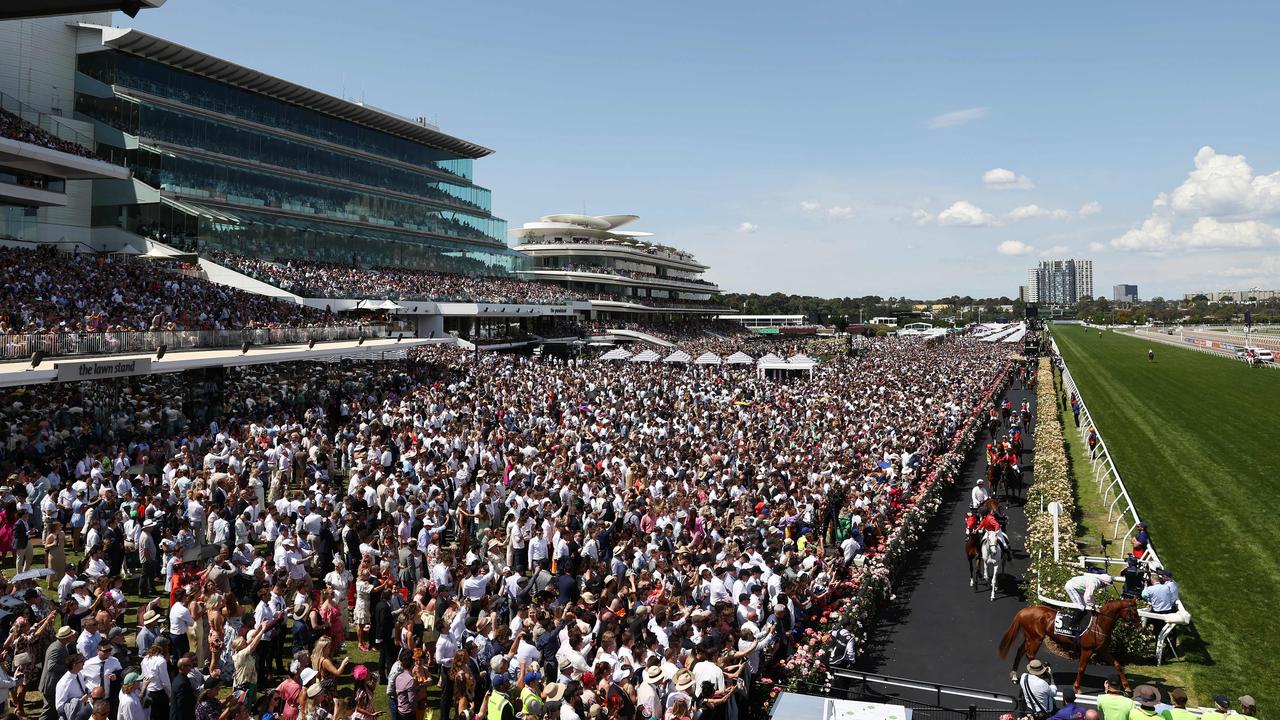
This Year of the Horse brings with it the largest ever FIFA World Cup, a Winter Olympics and Commonwealth Games on top of a myriad of high profile, revenue stimulating sporting leagues and events.
The numbers are compelling. In a typical year, sport generates over $700 billion annually, or approximately 1 percent of global GDP. Sports Tourism matches that sum and is projected to grow to $1,984 billion by 2034 according to Fortune Business Insights.
These are not niche figures. They represent a category of economic activity that governments are increasingly treating as strategic infrastructure.
Thoroughbred racing sits at the premium end of that category. Events of the scale and prestige of the Dubai World Cup, Saudi World Cup and Melbourne Cup have established themselves as core economic contributors to Dubai, the Kingdom of Saudi Arabia and Australia respectively.
Dubai World Cup
Up to $300 million contribution to tourism, hospitality and retail
The Dubai World Cup is one of the most powerful tools in the UAE's economic diversification strategy. The event draws high-net-worth individuals from across the globe, stimulates luxury hospitality, private aviation, and retail, and reinforces Dubai's positioning as a world-class destination for international events.
The Dubai Economic Department estimates the scale of this contribution as being up to $300 million annually (Tourism: $100–150 million; Hospitality $50–100 million; Retail: $50–100 million), with the event not only providing an immediate economic benefit but also fostering long-term growth by strengthening international ties, job creation across various sectors, and international branding.
The UAE's travel and tourism sector recorded the third-fastest growth in the region in 2025, driven in part by the sustained success of large-scale events of this calibre.
Saudi Cup
$150 million – $200 million in brand exposure alone
The Saudi Cup has followed a similar trajectory to Dubai, but with even greater ambition. Established in 2020 with a US$20 million headline purse — the world's most valuable — the event has grown rapidly in both scale and global reach. By 2026, the Saudi Cup was broadcast across more than 200 territories through 35 global media outlets, including Fox Sports in the United States, Sky Sports and Racing TV in the United Kingdom, Sony Pictures Networks across India and the subcontinent, and ESPN across 50 Latin American territories. Industry analysts estimate the brand exposure value of a broadcast footprint of this scale at between $150 million and $200 million for a single event weekend.
That figure does not include the indirect value. The Saudi Cup's "Golden Hour" broadcast package, produced by a BAFTA-winning team, was specifically designed to showcase Riyadh's infrastructure and cultural identity to a global audience — a direct contribution to Saudi Arabia's Vision 2030 goal of increasing sport's contribution to GDP to $22.4 billion.
Melbourne Cup
AUD848 million to the Australian economy in 2025
The Melbourne Cup is a driver of key channels of the national economy and foundational to the branding of the City of Melbourne. It is an entrenched cultural event in a passionate sporting nation, but many would be surprised to understand the financial contribution to various economic sectors:
Fashion, Groom, Retail: AUD63.4 million
Accommodation: AUD46.6 million
Food & Beverage: AUD35.9 million
The 2025 Melbourne Cup was broadcast to 209 countries and territories and also drives interstate and regional tourism.
"Sports are a unique cultural ambassador. We're seeing unprecedented levels of cross-border interaction during global events. This fosters not just entertainment, but genuine understanding between nations."
Dr. Amina Khan, Sports Sociologist, Global Culture Institute
These events are soft power in their most commercially sophisticated form.
The indirect benefits compound over time. A well-structured racing industry sees real money spent across a spectrum of economic sectors and stimulating all levels of an economy. Beyond generating tens of thousands of jobs, it creates national heroes and cultural narratives that resonate across borders. It promotes active lifestyles and demands infrastructure investment that serves communities outside of race days. And it can anchor a calendar of events central to a national tourism campaign.
The question is not whether sports, such as thoroughbred racing, delivers economic value. The evidence is clear. The question is whether the right expertise is in place to blueprint, design, construct and manage these sports so their full value is extracted and the benefits they generate are enjoyed for generations to come.
This is a central contribution Barandu was designed to make.
Sources
- BM Events — How the Dubai World Cup Boosted UAE Tourism
- Digital Dubai — Dubai's Economy Records AED355 Billion GDP in First Nine Months of 2025
- World Sports Advertising — Impact of Sport on the Global Economy
- Our Culture Magazine — The Influence of Sports on Cultural Unity Across Nations
- Victoria Racing Club — 2025 Melbourne Cup Carnival Economic Impact
- Fortune Business Insights — Sports Tourism Market Report
UHNW Investment
By Eden Harrington
5 min read
April 2026
The Winner's Enclosure: Why Elite Thoroughbred Racing Belongs in the UHNW Portfolio
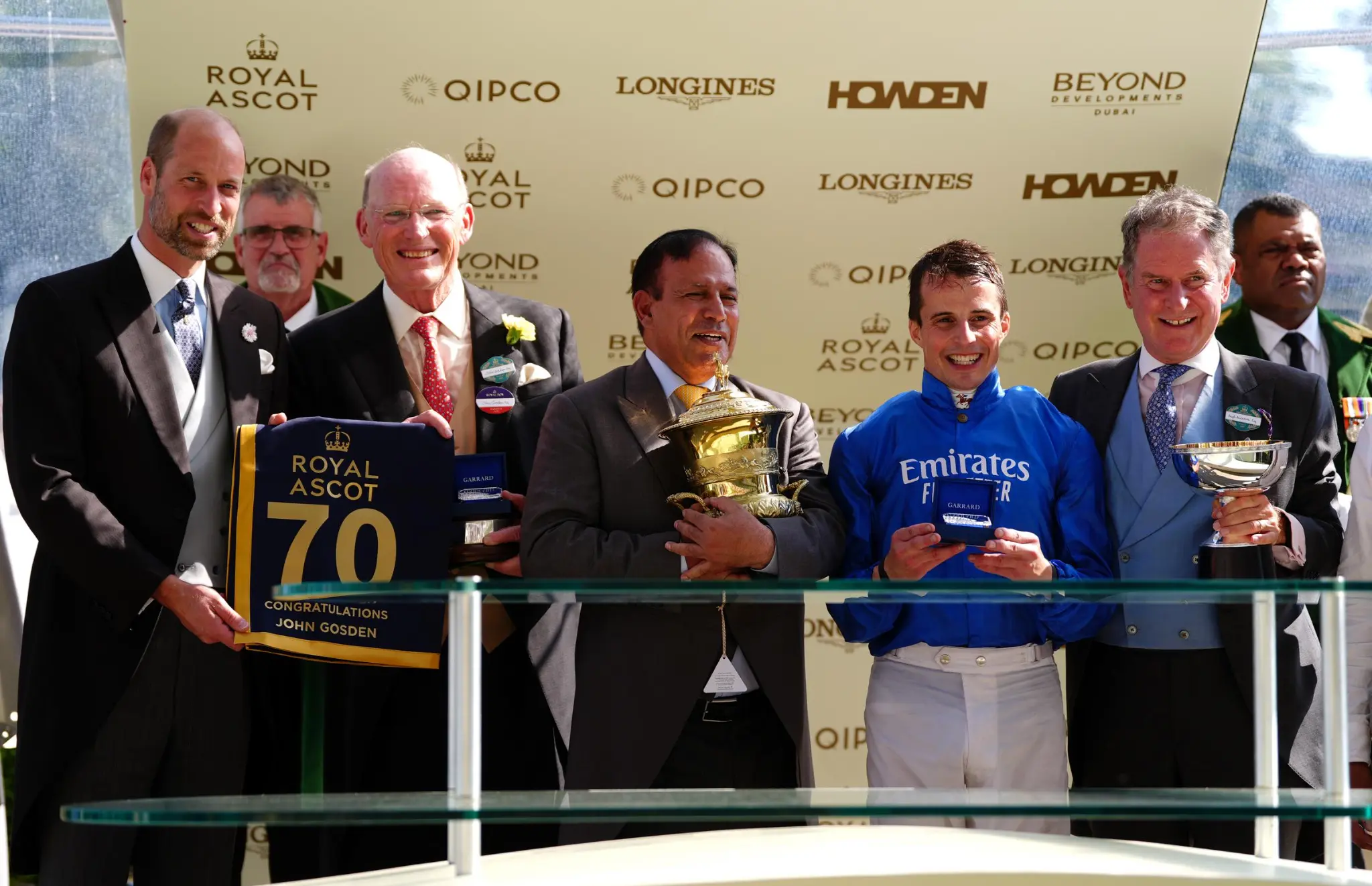
The most powerful rooms in the world are not boardrooms. They are winner's enclosures.
At the very top of thoroughbred racing, the metrics that govern conventional investment cease to apply. Return on equity does not fully capture what it means to stand in the Royal Enclosure at Ascot as a trophy is presented by a member of the British Royal Family. A discounted cash flow model cannot quantify the moment your colt crosses the line at Churchill Downs winning the Kentucky Derby, in front of 160,000 spectators and 22 million television viewers, to claim the lion's share of a $5 million purse and a stallion valuation that may reach $50 million.
This is a different class of asset. And it demands a different framework for understanding its value.
The Kentucky Derby fields twenty horses. Twenty from a national pool of just over 17,000 foals, half of whom are colts. Of the 160,000 who descend on Louisville each May, fewer than 0.1 percent will stand in that enclosure as an owner of a Derby contender. The scarcity is absolute. The access it confers is rarer still.
That access is the point.
Elite racing creates proximity — to heads of state, family dynasties, and the famous from all fields, including the individuals who shape global capital flows and control sovereign wealth funds — in a setting defined by shared passion as much as commercial agenda. Relationships forged over a common interest, in person, on common ground, carry a weight that no formal introduction can replicate.
“You want to do business with royalty or business royalty but can't get through the theoretical front door? What if you met as equals on a racetrack and began a conversation about their horse or today's race?”
Common interest to friendships to racing partnerships to business partnerships. This is how elite entrepreneurs utilize racehorse ownership and benefit and most of the world is oblivious.
For the individual, the family, or the institution seeking to elevate their international profile, a carefully constructed racing and breeding operation remains one of the most efficient vehicles to fast track this aspiration. The sport is global, its calendar relentless, and its audience self-selecting. Presence at the right meetings — Royal Ascot, the Arc, the Dubai World Cup, the Breeders' Cup — places an owner at the intersection of influence, culture, and capital on a scale that conventional sponsorship or philanthropy rarely achieves.
This isn't to say racing is exclusively an expensive hobby or a ‘loss leader’. It most certainly isn't. Well planned and well managed thoroughbred portfolios can be profit centres as well as lifestyle definers and exhilaration generators.
Some of the world's most financially astute use the deep commercial pools of the thoroughbred industry as a protective offset against overleveraging in other asset classes, be that stocks, bonds, real estate, currency, crypto and more.
Roll out the well-used financial phrase, Asset Diversification, is it a strategy being utilized by minds as sharp as George Soros and John Magnier. Soros' sharpest advisor setup SF Bloodstock (Soros Fund Bloodstock) ahead of the Global Financial Crisis as a non-traditional investment tool and has been rewarded year after year after year.
Magnier's Coolmore empire is foundational to the code. But it is also a piece, albeit a big one, of a diversified portfolio that currently or has previously held significant investment positions in healthcare, pub chains, hotels, land, art and at one time Manchester United.
Elite thoroughbreds are a secret door into a special world. A world many want to access but only the few do.
Barandu supports principals on how to create and manage an international thoroughbred operation as well as how to reinvigorate them or scale them. From bloodstock acquisition to jurisdictional strategy to partnership opportunities to long-term brand positioning, we can open those doors you want to walk through.
For those considering entry at the elite level, the conversation begins with a clear-eyed assessment of objectives. When you are ready, let us know how we can help you realize your ambitions.
The enclosure is waiting.
Stay Informed
Be notified when new articles are published.
Articles will be published as they are completed. If you would like to be informed when new pieces become available, please register your interest via our contact form. We do not send unsolicited correspondence.
Register your interest